
Is your kitchen sink draining slowly or not at all? A clogged sink can disrupt your entire routine, making simple tasks frustrating and messy.
But don’t worry—you don’t need to call a plumber right away or spend a fortune on repairs. You’ll discover easy, effective ways to unclog your kitchen sink yourself. By the end, you’ll have the confidence and know-how to fix the problem quickly and keep your sink running smoothly.
Ready to get started? Let’s dive in!
Contents
Common Causes Of Kitchen Sink Clogs
Kitchen sink clogs happen for many reasons. Knowing the common causes helps fix the problem faster. Most clogs result from things that block the pipes over time. These blockages stop water from flowing freely. Understanding these causes can save time and effort during cleaning.
Food Particles And Grease
Food bits often get stuck in the drain. Small pieces like rice, coffee grounds, or vegetable peels build up. Grease is worse. It looks liquid but hardens inside pipes. Grease coats the pipe walls, trapping food particles. Over time, the blockage grows and blocks water flow.
Soap Scum Build-up
Soap scum forms from soap and minerals in water. It sticks to pipe surfaces as a hard layer. This layer narrows the drain pipe space. Soap scum traps dirt and other debris. The pipe becomes narrower until water drains slowly or stops.
Foreign Objects
Small objects can accidentally fall into the sink drain. Things like jewelry, bottle caps, or small toys block pipes. These items cause sudden clogs that stop water instantly. Removing foreign objects quickly prevents bigger pipe damage.
Pipe Issues
Old or damaged pipes cause frequent clogs. Pipes may crack, rust, or sag over time. These problems trap debris and slow water flow. Tree roots can grow into underground pipes, causing blockages, too. Regular pipe checks help avoid these issues.
Credit: www.homedepot.com
Tools Needed For Unclogging
Unclogging a kitchen sink requires the right tools. Having these tools ready makes the task easier and faster. Each tool serves a specific purpose in clearing the blockage. Knowing which tool to use helps avoid damage to your sink or pipes.
Plunger
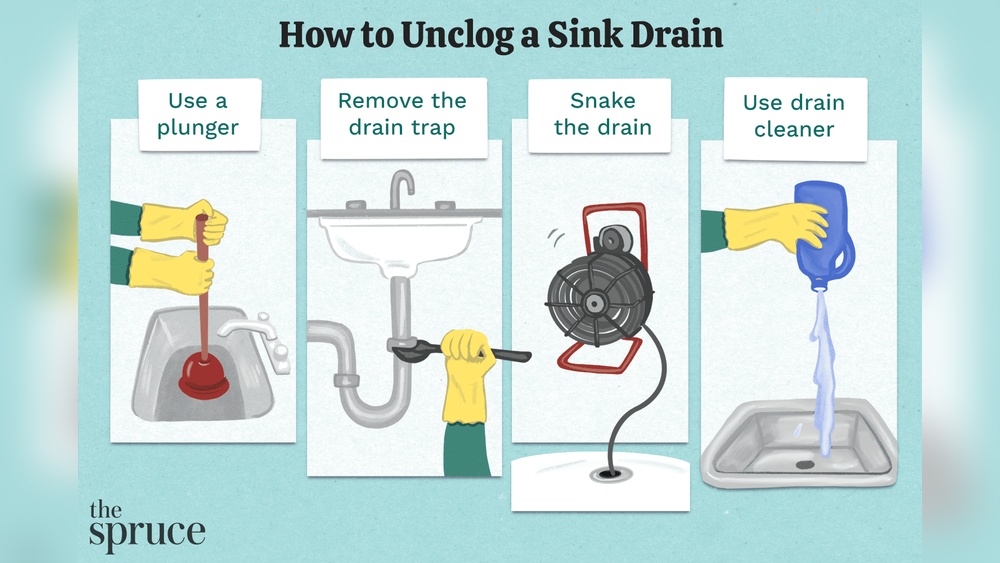
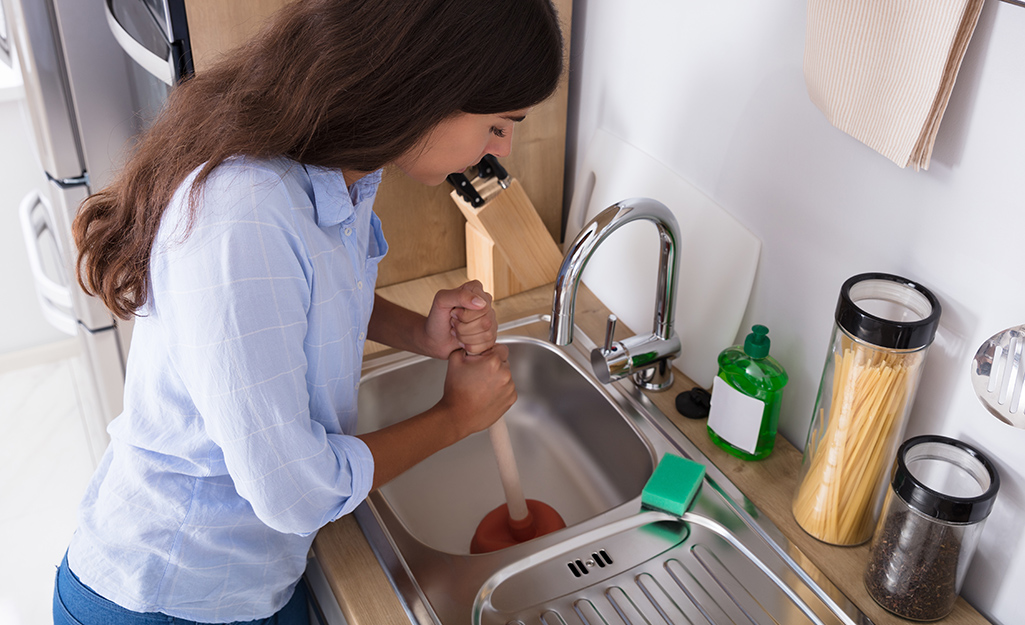
A plunger creates pressure to push the clog away. It works best for clogs near the drain opening. Use a cup plunger with a flat rim for sinks. Make sure to cover the drain completely with the plunger. Push and pull to loosen the blockage.
Drain Snake
A drain snake is a long, flexible wire. It reaches deep into the drain to break up clogs. Turn the handle to move the snake through the pipe. It is useful for stubborn blockages that a plunger cannot clear. Be gentle to avoid scratching the pipes.
Baking Soda And Vinegar
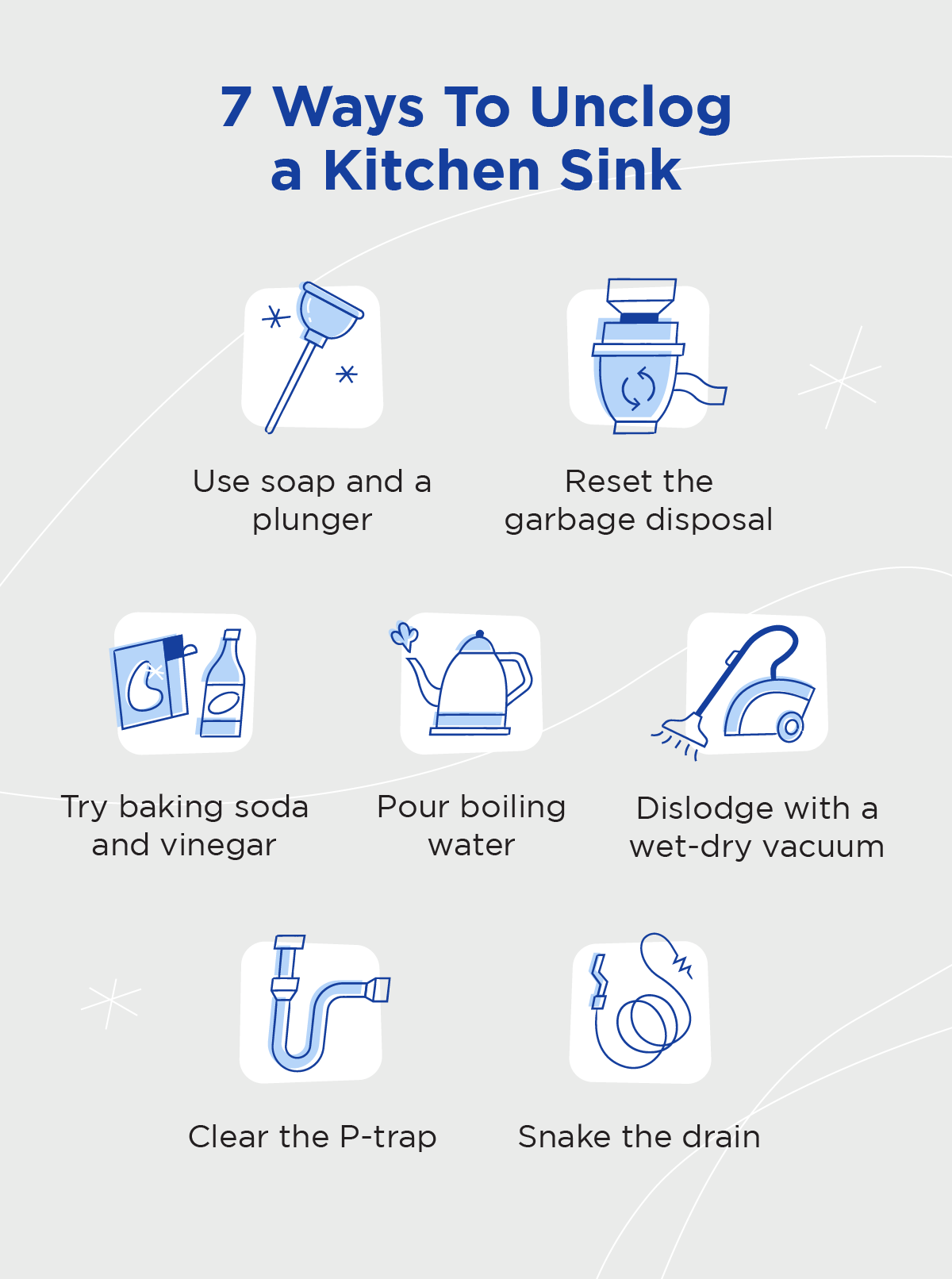
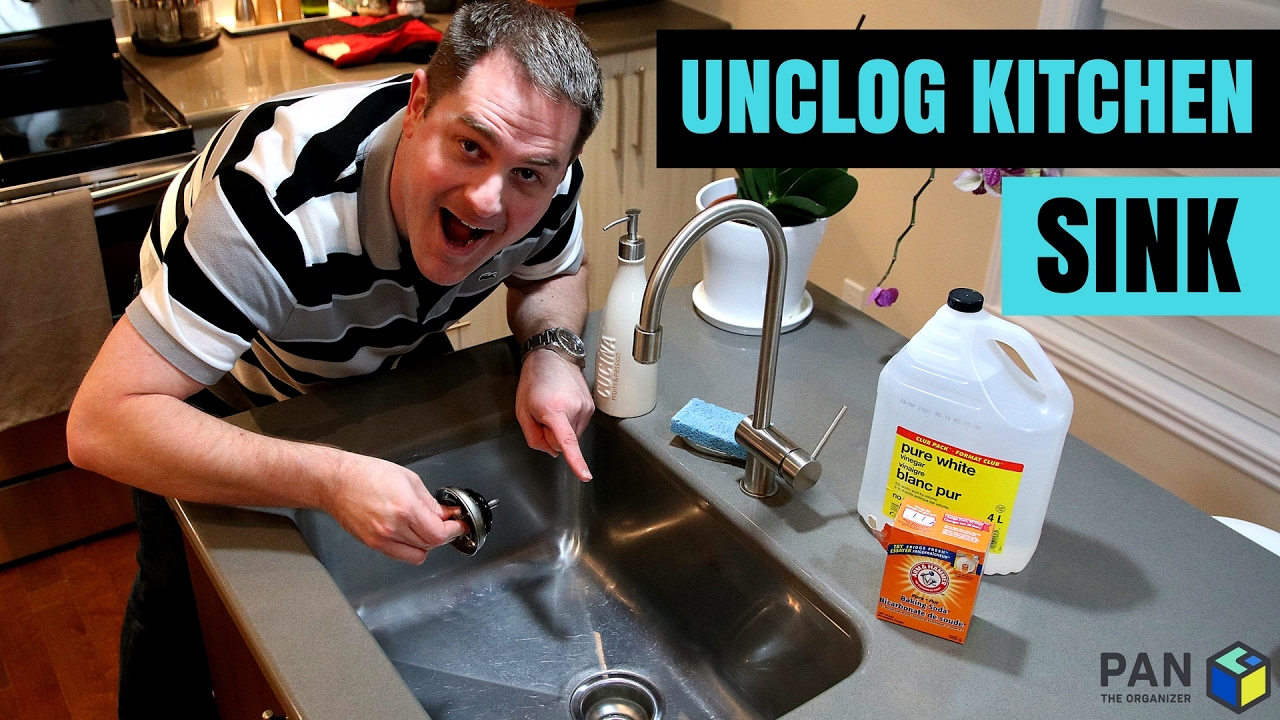
This natural mixture helps dissolve small clogs and odors. Pour half a cup of baking soda down the drain first. Follow with half a cup of vinegar. Wait 15 to 30 minutes for the reaction. Then, flush the drain with hot water to clear debris.
Boiling Water
Boiling water can melt grease and soap buildup in pipes. Slowly pour boiling water directly into the drain. Repeat the process a few times if needed. It is a simple and chemical-free way to clear minor clogs. Avoid using boiling water on PVC pipes to prevent damage.
Bucket And Wrench
A bucket and wrench help remove the sink trap under the drain. Place the bucket under the trap to catch water. Use the wrench to loosen the slip nuts on the trap. Clean out any debris causing the clog. Reassemble the trap securely to prevent leaks.
Quick Fixes Before Deep Cleaning
Before diving into deep cleaning, try quick fixes to clear your kitchen sink. These methods save time and often solve minor clogs. They use common household items and simple tools. Quick fixes can avoid harsh chemicals and protect your pipes.
Using Hot Water And Dish Soap
Pour a pot of hot water down the drain. Add a few drops of dish soap first. The soap helps break down grease and oils. Wait a few minutes and flush the drain with more hot water. This method loosens soft clogs and clears small blockages fast.
Applying Baking Soda And Vinegar
Start with half a cup of baking soda. Pour it directly into the drain. Follow with half a cup of white vinegar. The mixture fizzes and breaks down grime inside pipes. Let it sit for 15 minutes. Rinse the drain with hot water to wash away debris.
Plunging The Drain
Use a sink plunger to push and pull water forcefully. Place the plunger over the drain, ensuring a tight seal. Pump the plunger up and down several times. This pressure helps dislodge stuck food and grease. After plunging, run hot water to clear loosened debris.
Step-by-step Drain Snake Method
Using a drain snake is a direct way to clear a kitchen sink clog. This tool reaches deep inside the drain to break or pull out blockages. Follow these simple steps to use a drain snake effectively and safely.
Preparing The Area
Clear the space under your sink. Remove any items that could get wet or damaged. Place a bucket or bowl under the drain pipe to catch water or debris. Put on gloves to protect your hands from dirt and bacteria.
Inserting The Snake
Take the end of the drain snake and slowly push it into the drain opening. Turn the handle clockwise as you feed the snake deeper. Keep pushing gently until you feel resistance. This means the snake has reached the clog.
Removing The Clog
Turn the snake’s handle to break up or hook the clog. Pull the snake back carefully while continuing to turn it. Remove any debris stuck on the snake’s coil. Repeat if you feel more resistance inside the drain.
Testing The Drain
Run water down the sink to check if it drains well. Listen for any gurgling or slow drainage sounds. If water flows smoothly, the clog is cleared. If not, repeat the snake process or try another method.
Clearing The P-trap
Clearing the P-trap is a key step in fixing a clogged kitchen sink. This curved pipe holds water and stops sewer gases from entering your home. Over time, food, grease, and debris can build up inside it. Cleaning the P-trap often solves many drainage problems quickly and easily.
Locating The P-trap
Look under the sink to find the P-trap. It is the curved pipe connecting the sink drain to the wall pipe. The shape looks like the letter “P” or a horseshoe. Usually, it is made of metal or plastic. Make sure to place a bucket underneath to catch any water when you remove it.
Removing And Cleaning
Use pliers or your hands to loosen the slip nuts on both ends of the P-trap. Gently remove the pipe and empty the water inside the bucket. Check for any clogs or debris stuck inside the trap. Use a brush or a cloth to clean the inside well. Rinse it with warm water to remove grease and dirt.
Reassembling The Trap
Put the P-trap back in place carefully. Tighten the slip nuts by hand until secure, then use pliers to make them snug. Avoid over-tightening to prevent damage. Run water in the sink to check for leaks. If no water drips, your sink should drain smoothly again.
Credit: www.mrrooter.com
Preventing Future Clogs
Preventing future clogs in your kitchen sink saves time and effort. Small habits can keep your drains clear and flowing well. Simple steps make a big difference in avoiding blockages.
Proper Waste Disposal
Dispose of food scraps in the trash, not the sink. Avoid pouring grease or oil down the drain. These substances harden and cause clogs. Use a compost bin for vegetable peelings and coffee grounds.
Regular Maintenance Tips
Clean your sink drain every week. Pour boiling water down the drain to clear minor buildup. Use a mixture of baking soda and vinegar monthly to keep pipes fresh. Check under the sink for leaks or slow drainage often.
Using Drain Screens
Install drain screens to catch food particles and debris. Empty the screens after each use to prevent buildup. Drain screens are cheap and easy to clean. They protect your pipes from blockages and save plumbing costs.
When To Call A Professional
Knowing when to call a professional plumber saves time and prevents damage. Some clogs need special tools and skills. Trying to fix serious blockages alone can cause leaks or broken pipes. Recognizing the signs helps you decide when to get expert help.
Signs Of Serious Blockages
Water drains very slowly or not at all. You hear strange noises like gurgling from the sink. Foul smells come from the drain. Water backs up into other sinks or appliances. These signs show the clog is deep and tough to clear.
Avoiding Damage
Using harsh chemicals or force can harm your pipes. Pipes may crack or leak if you push too hard. A professional uses safe methods to protect your plumbing. Calling a plumber early prevents costly repairs later.
Finding The Right Plumber
Choose a plumber with good reviews and proper licenses. Ask about their experience with kitchen sink clogs. Get a clear price estimate before work starts. A skilled plumber finishes the job quickly and safely.
Credit: www.youtube.com
Frequently Asked Questions
How Do I Quickly Unclog A Kitchen Sink Drain?
Pour boiling water down the drain to dissolve grease buildup. Use a plunger to loosen blockages. Avoid harsh chemicals that damage pipes. Repeat as needed for minor clogs before trying other methods.
What Natural Solutions Unclog A Kitchen Sink?
Mix baking soda and vinegar, and pour it into the drain. Let it fizz for 15 minutes, then flush with hot water. This combination breaks down grease and food debris safely without harsh chemicals.
Can A Wire Hanger Fix A Clogged Kitchen Sink?
Yes, straighten a wire hanger and create a small hook. Insert it into the drain to pull out hair and debris. Be gentle to avoid pipe damage. This method works well for clogs near the surface.
When Should I Call A Plumber For A Clogged Sink?
If water drains slowly after DIY attempts or smells foul, call a plumber. Persistent blockages or leaks indicate deeper issues needing professional tools and expertise for safe repair.
Conclusion
Unclogging a kitchen sink can save time and money. Simple tools and steps often fix the problem fast. Avoid pouring grease or food scraps down the drain. Regular cleaning helps keep your pipes clear. Small efforts prevent big blockages later.
Stay patient and follow safety tips while working. A clear sink makes daily chores easier. Keep these easy methods in mind for next time. Your kitchen will stay clean and running well.