
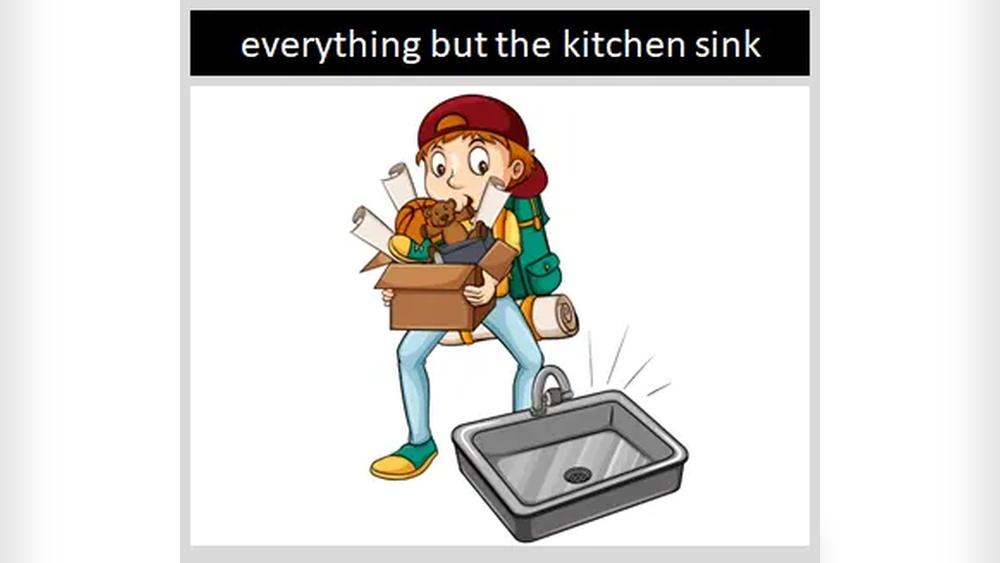
Have you ever heard someone say they packed “everything but the kitchen sink” and wondered what that really means? It’s a curious phrase that might leave you imagining a pile of random things, but there’s more to it than just a funny image.
Understanding this expression can add a bit of color to your conversations and help you catch subtle hints in everyday speech. If you want to know where this phrase comes from and how to use it like a pro, keep reading—your language skills are about to get a whole lot sharper.

Credit: www.professorpotts.com
Contents
Origin Of The Phrase
The phrase “everything but the kitchen sink” sounds funny, but it has a clear origin. It means including almost everything possible. Understanding where it came from helps explain why it feels so complete and all-encompassing.
This expression started many years ago. People used it to show something had many parts or items, except for one very specific thing—the kitchen sink. Let’s explore the history and cultural background of this phrase.
Historical Background
The phrase appeared in the early 1900s in America. It first showed up in print around 1918. At that time, people used it to describe packing or preparing with almost every item available.
During World War I, soldiers and their families often packed their belongings very carefully. They would take almost everything they could, “everything but the kitchen sink.” This helped the phrase gain popularity.
Later, it moved into everyday language. People started using it to talk about big efforts or large collections of things. The phrase stuck because of its clear, vivid image.
Cultural Roots
The phrase reflects a practical time in American culture. Kitchens were central to homes, and the sink was a large, heavy fixture. It was one thing people rarely moved or took along.
This made the kitchen sink a perfect symbol for the last thing left behind. The phrase shows how people imagined packing or gathering almost all items except that heavy, fixed sink.
Today, it also shows up in British English and other cultures. It means including nearly everything, showing how widely the phrase has spread from its original roots.
Literal Vs. Figurative Meaning
Understanding the phrase “everything but the kitchen sink” requires exploring both its literal and figurative meanings. The literal meaning is straightforward but rarely used in everyday speech. The figurative meaning, on the other hand, is common and adds color to conversations. Knowing the difference helps you use the phrase correctly and understand it better.
Literal Interpretation
Literally, the phrase means including every item except the kitchen sink. Imagine packing all household items but leaving out the sink. It paints a picture of taking almost everything possible. This meaning is simple but not often used in real life. People rarely talk about carrying a kitchen sink.
Common Figurative Use
Figuratively, the phrase means including nearly everything imaginable. People use it to describe situations with many items or details. For example, packing a suitcase with many clothes and gadgets might be described this way. It shows abundance or excess. The phrase adds humor or exaggeration to speech. It helps describe overwhelming or cluttered situations.
Usage In Everyday Language
The phrase “everything but the kitchen sink” appears often in daily speech. It describes situations where almost all items or options are included. People use it to express abundance or excess. This idiom helps paint a clear picture quickly.
Its use is common in both casual talk and written content. Understanding how it fits in different contexts makes it easier to grasp. Let’s explore how this phrase shows up in everyday language.
Casual Conversations
In daily chats, people use this phrase to describe packed or overloaded things. For example, a friend might say, “She brought everything but the kitchen sink to the picnic.” This means she brought many items, more than needed.
It adds humor and exaggeration without sounding serious. It makes the talk lively and relatable. This phrase often appears in family talks, among friends, or casual settings.
Writing And Media
Writers use this idiom to show fullness or variety in stories or articles. It quickly conveys the idea of including many elements. News articles, blogs, and even ads might use it to catch attention.
In media, it helps create vivid scenes or descriptions. Authors might say, “The suitcase had everything but the kitchen sink.” Readers understand the suitcase is very full, making the story more engaging.

Credit: funkyenglish.com
Examples In Sentences
Understanding how the phrase “everything but the kitchen sink” works in sentences helps grasp its true meaning. This phrase means including almost everything possible, except something very obvious or expected. Seeing examples makes it easier to remember and use the phrase correctly in daily conversations and writing.
Everyday Examples
She packed everything but the kitchen sink for her trip. It means she took almost all her belongings.
The party had decorations, food, games—everything but the kitchen sink. This shows the host included almost all possible items.
He tried everything but the kitchen sink to fix his car. It means he used many methods, but not every single one.
Creative Uses
The artist included colors, shapes, textures—everything but the kitchen sink. This phrase highlights a very full and varied work.
The report had charts, graphs, data—everything but the kitchen sink. It shows the report was very detailed and complete.
For the fundraiser, they offered prizes, snacks, and games—everything but the kitchen sink. It suggests a wide variety of things were available.
Similar Phrases And Idioms
Many idioms and phrases share meanings similar to “everything but the kitchen sink.” They describe situations where almost everything is included or used. These expressions often highlight excess or thoroughness in a fun, relatable way.
Exploring these phrases helps readers understand subtle differences. It also adds variety when expressing the same idea in writing or speech.
Related Expressions
One common phrase is “the whole nine yards.” It means doing something completely or using everything possible. Another is “all the bells and whistles,” which refers to including many features or extras.
“Throwing caution to the wind” suggests using all resources without holding back. “Going the extra mile” means putting in more effort than usual. Each phrase shows doing a lot or using many things.
Differences And Nuances
“Everything but the kitchen sink” often implies too much or nearly everything. “The whole nine yards” sounds more complete and thorough rather than excessive. “All the bells and whistles” focuses on extras, not basics.
Some phrases suggest effort, like “going the extra mile,” instead of items or things. Others, like “throwing caution to the wind,” emphasize risk and boldness.
Choosing the right phrase depends on tone and context. Some fit better for physical items, others for actions or effort.
Why People Use This Phrase
The phrase “everything but the kitchen sink” is popular in everyday speech. People use it to describe a large amount of things or effort. It suggests nearly everything has been included. This expression helps people paint a vivid picture quickly. It adds color to conversations and writing. Understanding why people use this phrase reveals its charm and usefulness.
Expressing Abundance
This phrase shows a vast or overwhelming quantity. It means almost all possible items or ideas are present. People use it to stress the sheer number of things involved. It helps convey a sense of plenty without listing every item. For example, packing “everything but the kitchen sink” means taking nearly all belongings. This vivid image makes the message clear and strong.
Adding Humor Or Emphasis
Using this phrase adds a playful tone to speech. It often exaggerates to make a point with humor. Saying someone packed “everything but the kitchen sink” creates a funny mental picture. It lightens the mood while emphasizing effort or quantity. This phrase keeps conversations lively and engaging. It helps speakers connect with their audience better.

Credit: www.idioms.online
Frequently Asked Questions
What Does “everything But The Kitchen Sink” Mean?
It means including almost everything imaginable, except one minor item. The phrase implies excess or completeness in what’s included.
Where Did The Phrase Originate From?
The phrase originated in early 20th-century America, highlighting an exaggerated list of items packed or included. It reflects thoroughness or abundance.
How Is This Phrase Used In Everyday Language?
People use it to describe situations where nearly everything is considered, packed, or done. It often implies overdoing or thoroughness.
Can “everything But The Kitchen Sink” Have Negative Connotations?
Yes, it can suggest overkill, clutter, or unnecessary inclusion of items. Sometimes it hints at disorganization or excessiveness.
Conclusion
The phrase “everything but the kitchen sink” means including almost everything. People use it to describe very full or crowded things. It shows a lot is packed in one place. Now you know what the phrase means and how to use it.
Try using it in your own sentences to sound more natural. It’s a fun and useful expression to know. Keep practicing and you will remember it easily.